about
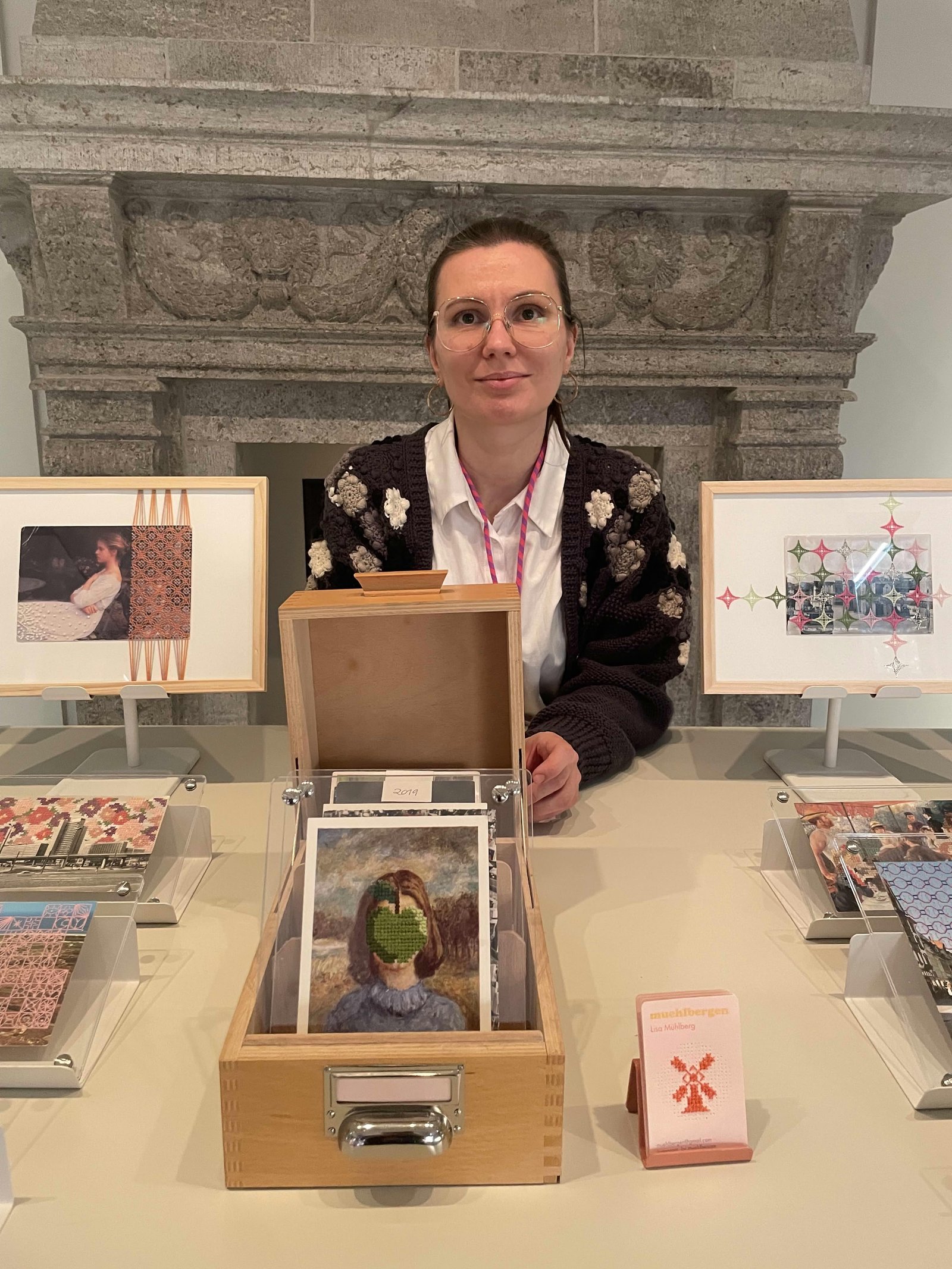
The idea behind my work is to give the mass-produced postcard a second life as a work of art. I achieve this by creating one-of-a-kind pieces that are meticulously hand-embroidered.
After training in graphic design and studying architecture, I worked in interior design for almost 7 years. In 2022, my partner and I spent six months travelling through South America. The elaborate embroidery and weaving work I saw there left a lasting impression on me. Back in Germany, I found a part-time job so I could build my small business alongside it and deepen my own embroidery work. Since then I've had the pleasure of taking part in various fairs and markets and carrying out several commissions.
Embroidery combines my passion for handicrafts with my fascination for old tchotchkes. Influenced by my family—particularly my grandmother and mother, who loved to knit, crochet, and sew—I carry on these techniques in a contemporary manner. My professional background in graphic design shapes my affinity for graphic elements, which translate particularly well into embroidery. The distortion or stylized representation of photorealistic motifs using time-honored embroidery techniques, such as cross-stitch, to create a pixelated effect, is a recurring theme in my work. My work exists at the intersection of graphic design, textile design, art, and handicrafts. The motifs in many of my works range from homage and pastiche to parody of various artists, motifs, or styles. Of particular interest here are the dissonances that arise when a “traditional” postcard motif is placed in a new context. Since the beginning of this year, I have been exploring, in various series, the adaptation and combination of motifs from architecture-related art—primarily from the GDR—and postcards depicting GDR architecture.
Bärbel Ambrus, who interviewed me at the Grassi fair for an article in the textile association's magazine, called my work “upcycling with appreciation” — a description I find very fitting. Here's an excerpt from her wonderful piece:
“Postcards were invented and have been used ever since as a mass product, from local to global. From sending to receiving — most postcards entered circulation, were kept, or passed on. This work recalls the emotionality of that process and of the card's design, and enriches it through contemporary, artisanal reworking. In this way, new, touching and often delightful works of art emerge from the historical treasure hidden away in boxes. Through this handmade elevation they arrive in the present, reaching new addresses and people. That is upcycling with appreciation — the preservation and passing-on of cultural heritage.”